7 Primary Metrics to Measure with Paper Testing Equipment
Examine how precise paper testing equipment verifies burst strength, RCT, and moisture properties under TAPPI and ISO standards to improve production yield.
Environmental Test Chamber Climate Test Chamber Salt Spray Test Chamber UV Aging Test Chamber Thermal Shock Test Chamber Dust Test Chamber Rain Test Chamber Boiling Test Chamber Dry Dehumidification Cabinet Xenon Test Chamber Universal Tensile Test Equipment Single Column Series Double Column Series Fixtures Drying Oven 200℃ Oven 300℃ Oven 400℃ Oven 500℃ Oven Vacuum Oven 27L Vacuum Oven 64L Vacuum Oven 125L Vacuum Oven 216L Vacuum Oven 512L Vacuum Oven 729L Vacuum Oven 1000L Vacuum Oven Two-box Vacuum Oven Three-box Vacuum Oven Vibration Shaker Table System Simulated Transportation Vibration Table Vertical Vibration Table Vertical Horizontal Vibration Table XYZ Three Axis Vibration Table Rubber And Plastic Test Equipment VICAT Tester Melt Flow Index Tester Flammability Test Equipment Charpy & Izod Impact Tester Paper Packaging Test Equipment Edge And Ring Crush Tester Drop Tester Carton Compression Tester Bursting Strength Tester Battery Test Equipment Videos About Us Our Partners & Clients Certifications & Honors Factory & Gallery Why Choose HAOEN Company Profile News Company News Industry News Contact 🇺🇸 English 🇫🇷 Français 🇩🇪 Deutsch 🇪🇸 Español .ml-sw{font-family:inherit;font-size:14px;line-height:1.5}.ml-dropdown{position:relative;display:inline-block;z-index:999}.ml-dd-trigger{display:flex;align-items:center;gap:6px;cursor:pointer;padding:4px 10px;border-radius:var(--ml-radius);color:var(--ml-text);transition:background .2s}.ml-dd-trigger:hover{background:rgba(0,0,0,.05)}.ml-dd-flag{font-size:18px}.ml-dd-icon{vertical-align:middle}.ml-dd-arrow{border:4px solid transparent;border-top:5px solid currentColor;margin-top:2px;transition:transform .2s}.ml-dropdown.open .ml-dd-arrow{transform:rotate(180deg)}.ml-dd-panel{display:none;position:absolute;top:100%;left:0;min-width:100%;width:max-content;background:var(--ml-bg);border-radius:var(--ml-radius);box-shadow:0 4px 16px rgba(0,0,0,.12);padding:4px 0;margin-top:4px}.ml-dropdown.open .ml-dd-panel{display:block}.ml-dd-item{display:flex;align-items:center;gap:8px;padding:8px 14px;color:var(--ml-text);text-decoration:none;transition:background .15s;white-space:nowrap}.ml-dd-item:hover{background:rgba(0,0,0,.04)}.ml-dd-item.active{color:var(--ml-primary);font-weight:500}.ml-dd-chk{margin-left:auto;font-size:12px}.ml-pills{display:flex;flex-wrap:nowrap;gap:6px;white-space:nowrap}.ml-pill{display:inline-flex;align-items:center;gap:4px;padding:4px 12px;border-radius:var(--ml-radius);background:var(--ml-bg);color:var(--ml-text);text-decoration:none;border:1px solid rgba(0,0,0,.1);transition:all .2s;font-size:13px;white-space:nowrap}.ml-pill:hover{border-color:var(--ml-primary);color:var(--ml-primary)}.ml-pill.active{background:var(--ml-primary);color:#fff;border-color:var(--ml-primary)}.ml-pill-flag{font-size:16px}.ml-bar{display:flex;gap:0;border-bottom:2px solid rgba(0,0,0,.06);white-space:nowrap}.ml-bar-item{display:inline-flex;align-items:center;gap:4px;padding:6px 14px;color:var(--ml-text);text-decoration:none;border-bottom:2px solid transparent;margin-bottom:-2px;transition:all .2s;font-size:13px;white-space:nowrap}.ml-bar-item:hover{color:var(--ml-primary)}.ml-bar-item.active{color:var(--ml-primary);border-bottom-color:var(--ml-primary);font-weight:500}.ml-bar-flag{font-size:16px}.ml-float{position:fixed;right:20px;bottom:20px;z-index:9999}.ml-float-btn{width:48px;height:48px;border-radius:50%;background:var(--ml-primary);color:#fff;border:none;cursor:pointer;box-shadow:0 4px 12px rgba(0,0,0,.2);transition:transform .2s;display:flex;align-items:center;justify-content:center;padding:0;line-height:1}.ml-float-btn:hover{transform:scale(1.1)}.ml-float-btn svg{width:24px;height:24px;display:block}.ml-float-panel{display:none;position:absolute;bottom:56px;right:0;min-width:160px;background:var(--ml-bg);border-radius:var(--ml-radius);box-shadow:0 4px 16px rgba(0,0,0,.12);padding:4px 0}.ml-float.open .ml-float-panel{display:block}.ml-float-item{display:flex;align-items:center;gap:8px;padding:8px 14px;color:var(--ml-text);text-decoration:none;transition:background .15s}.ml-float-item:hover{background:rgba(0,0,0,.04)}.ml-float-item.active{color:var(--ml-primary);font-weight:500}.ml-float-flag{font-size:18px} function mlSwToggle(){var e=document.getElementById("mlSw");if(e)e.classList.toggle("open")}document.addEventListener("click",function(e){var s=document.getElementById("mlSw");if(s&&!s.contains(e.target))s.classList.remove("open")}); News & Updates Stay informed with the latest industry news and company updates
Structural Integrity and Mechanical Strength Evaluation
News Industry News Industry News 7 Primary Metrics to Measure with Paper Testing Equipment 2026-08-10 Industry News 1 views Paper manufacturing and converting operations depend on precise measurement to verify structural durability and surface functionality. Small variances in pulp fibers, refinement intensity, or drying profiles alter the performance of linerboard, folding cartons, and specialty sheets. Incorporating high-precision instrument suites enables quality laboratories to monitor physical behavior across varying atmospheric conditions and mechanical stress parameters. As mill operations shift toward higher recycled fiber ratios, standardizing physical evaluations becomes central to preventing yield loss and product failures downstream. HAOEN delivers specialized instrument lines engineered to meet these rigorous mechanical demands, assuring consistent performance across global supply chains. Implementing robust paper testing equipment allows quality managers to detect fiber defects early, streamline raw material usage, and confirm strict compliance before shipments leave the floor.
Physical durability remains a primary concern for packaging producers and paper mills. Evaluating the stress capacity of paperboard requires distinct methodologies targeting specific failure modes under load. Precision instruments reproduce real-world stresses—such as stacking force, bursting pressure, and tension—within controlled laboratory settings.
Surface Properties, Absorbency, and Microstructure Analysis
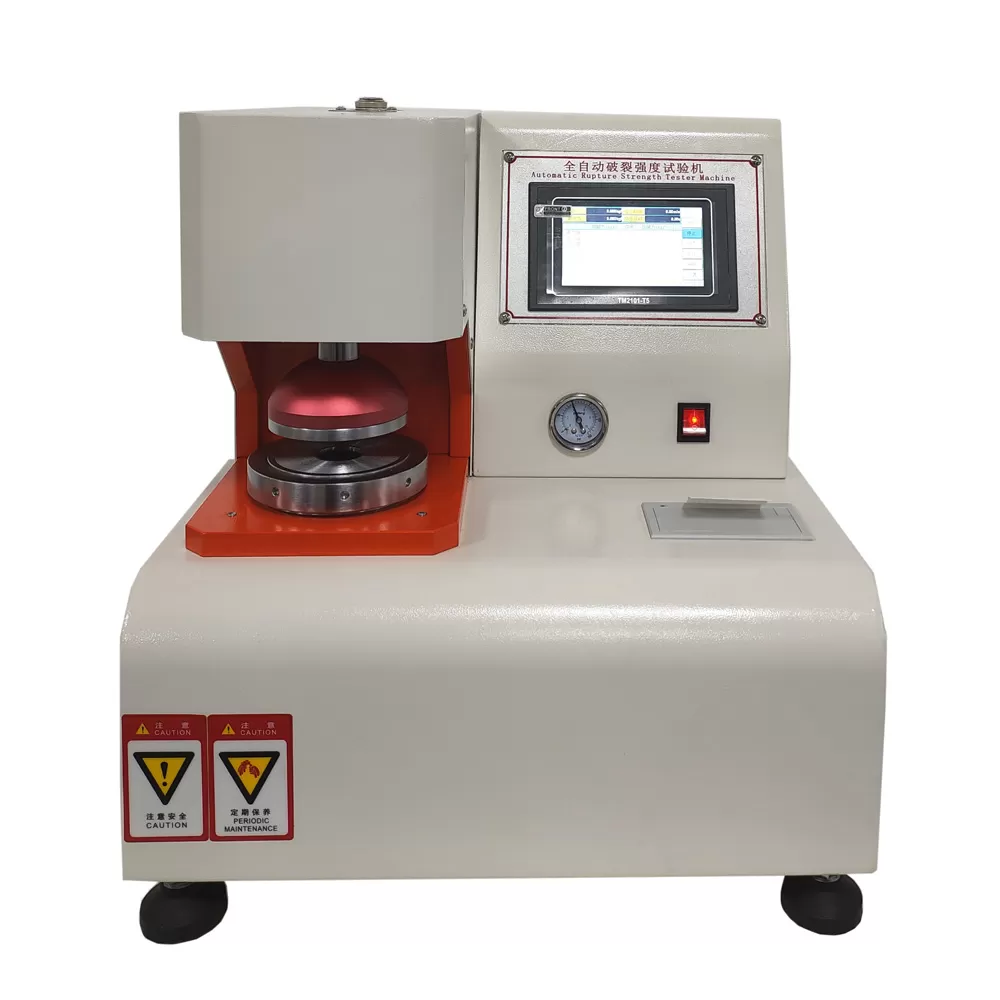
Hydraulic pressure systems measure the rupture point of paper under multidirectional strain. By clamping a specimen over an expanding elastic diaphragm, laboratory apparatuses record the bursting strength in kilopascals (kPa). This value, commonly called the Mullen burst value, correlates directly with a containerboard container's ability to endure rough handling and internal pressures during transport. Multi-ply boards and linerboards require dynamic pressure rates to prevent premature edge tearing, necessitating precise pressure transducers and uniform clamping forces during testing.
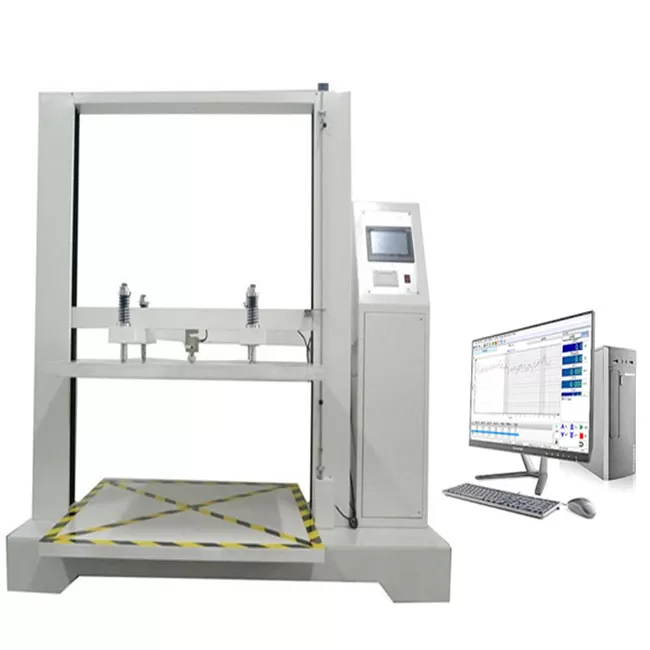
Boxboard structural stability relies on resistance to compression under vertical stacking loads. Several key methodologies isolate individual mechanical characteristics:
Adherence to International Standards and Environmental Control
Short-Span Compression Testing (SCT): Evaluates individual fiber wall strength over extremely short clamping distances (typically 0.7 mm). SCT minimizes specimen buckling, yielding a pure measurement of compressive yield strength that predicts corrugated box performance accurately.
Production Integration and Quality Protocol Optimization
Edge Crush Testing (ECT): Evaluates the total compressive strength of assembled corrugated board sections. ECT data directly feeds into the McKee formula for predicting combined box compression values.
Frequently Asked Questions
Tensile instruments apply continuous uniaxial strain to a paper strip until failure occurs. Modern units capture tensile strength, stretch percentage, and Tensile Energy Absorption (TEA). High TEA values indicate that the sheet absorbs impact energy without breaking, a property vital for multiwall sacks and continuous web printing operations where sudden tensions cause costly web breaks.
Enhance Your Quality Control Operations
Beyond mechanical load capacity, the interaction between paper surfaces and liquids, inks, or adhesives dictates performance in printing and converting operations. Evaluating surface smoothness, porosity, and absorption parameters helps plant engineers fine-tune coater blades and sizing applications.
Key considerations for laboratory teams
Cobb sizing testers establish the water absorption rate of non-absorbent paper and board over designated durations (typically 60 or 180 seconds). By measuring mass gain after exposure to a standardized water column, operators assess internal sizing agents like ASA or AKD. Proper sizing prevents ink feathering, maintains adhesive performance, and protects corrugated containers from humidity-induced softening.
Air-leak methods measure surface micro-roughness by determining the rate of air escaping between a precision flat ring and the paper sample. Key testing approaches include:
Bekk Method: Measures the time required for a set volume of air to pass over the paper surface under a specified vacuum. Higher time readings in seconds correspond to smoother surfaces suitable for high-resolution gravure printing.
Bendtsen and Sheffield Methods: Measure air flow rates across the sheet surface. Lower flow values indicate higher surface smoothness.
How HAOEN builds this equipment
The chamber described above is designed and manufactured in HAOEN's own plants in Dongguan, rather than assembled from purchased sub-assemblies. That distinction matters when a lab needs repeatable performance across a fleet of machines.
- Chamber geometry, airflow and insulation are engineered in-house and issued as controlled drawings
- Steel is cut, bent and welded on our own line, with stress relief and surface treatment between stages
- Refrigeration, electrical cabinets and sensor harnesses are installed and wired by our own technicians
- Each unit runs a full commissioning cycle with logged test data before the QC file is signed
- Export crating, anti-rust treatment and the complete document set are prepared in-house
Because engineering, production and calibration sit under the same roof, specification changes during a project are absorbed by the factory rather than passed between suppliers. Standard units follow the same route, which is why a catalogue model and a custom-built chamber carry the same documentation discipline.