Precision in Polymer Analysis: Rubber Testing Machine Essentials for Quality Control
Expert guide on rubber testing machine selection, test parameters, and maintenance. HAOEN offers insights for consistent material verification in manufacturing.
Environmental Test Chamber Climate Test Chamber Salt Spray Test Chamber UV Aging Test Chamber Thermal Shock Test Chamber Dust Test Chamber Rain Test Chamber Boiling Test Chamber Dry Dehumidification Cabinet Xenon Test Chamber Universal Tensile Test Equipment Single Column Series Double Column Series Fixtures Drying Oven 200℃ Oven 300℃ Oven 400℃ Oven 500℃ Oven Vacuum Oven 27L Vacuum Oven 64L Vacuum Oven 125L Vacuum Oven 216L Vacuum Oven 512L Vacuum Oven 729L Vacuum Oven 1000L Vacuum Oven Two-box Vacuum Oven Three-box Vacuum Oven Vibration Shaker Table System Simulated Transportation Vibration Table Vertical Vibration Table Vertical Horizontal Vibration Table XYZ Three Axis Vibration Table Rubber And Plastic Test Equipment VICAT Tester Melt Flow Index Tester Flammability Test Equipment Charpy & Izod Impact Tester Paper Packaging Test Equipment Edge And Ring Crush Tester Drop Tester Carton Compression Tester Bursting Strength Tester Battery Test Equipment Videos About Us Our Partners & Clients Certifications & Honors Factory & Gallery Why Choose HAOEN Company Profile News Company News Industry News Contact 🇺🇸 English 🇫🇷 Français 🇩🇪 Deutsch 🇪🇸 Español .ml-sw{font-family:inherit;font-size:14px;line-height:1.5}.ml-dropdown{position:relative;display:inline-block;z-index:999}.ml-dd-trigger{display:flex;align-items:center;gap:6px;cursor:pointer;padding:4px 10px;border-radius:var(--ml-radius);color:var(--ml-text);transition:background .2s}.ml-dd-trigger:hover{background:rgba(0,0,0,.05)}.ml-dd-flag{font-size:18px}.ml-dd-icon{vertical-align:middle}.ml-dd-arrow{border:4px solid transparent;border-top:5px solid currentColor;margin-top:2px;transition:transform .2s}.ml-dropdown.open .ml-dd-arrow{transform:rotate(180deg)}.ml-dd-panel{display:none;position:absolute;top:100%;left:0;min-width:100%;width:max-content;background:var(--ml-bg);border-radius:var(--ml-radius);box-shadow:0 4px 16px rgba(0,0,0,.12);padding:4px 0;margin-top:4px}.ml-dropdown.open .ml-dd-panel{display:block}.ml-dd-item{display:flex;align-items:center;gap:8px;padding:8px 14px;color:var(--ml-text);text-decoration:none;transition:background .15s;white-space:nowrap}.ml-dd-item:hover{background:rgba(0,0,0,.04)}.ml-dd-item.active{color:var(--ml-primary);font-weight:500}.ml-dd-chk{margin-left:auto;font-size:12px}.ml-pills{display:flex;flex-wrap:nowrap;gap:6px;white-space:nowrap}.ml-pill{display:inline-flex;align-items:center;gap:4px;padding:4px 12px;border-radius:var(--ml-radius);background:var(--ml-bg);color:var(--ml-text);text-decoration:none;border:1px solid rgba(0,0,0,.1);transition:all .2s;font-size:13px;white-space:nowrap}.ml-pill:hover{border-color:var(--ml-primary);color:var(--ml-primary)}.ml-pill.active{background:var(--ml-primary);color:#fff;border-color:var(--ml-primary)}.ml-pill-flag{font-size:16px}.ml-bar{display:flex;gap:0;border-bottom:2px solid rgba(0,0,0,.06);white-space:nowrap}.ml-bar-item{display:inline-flex;align-items:center;gap:4px;padding:6px 14px;color:var(--ml-text);text-decoration:none;border-bottom:2px solid transparent;margin-bottom:-2px;transition:all .2s;font-size:13px;white-space:nowrap}.ml-bar-item:hover{color:var(--ml-primary)}.ml-bar-item.active{color:var(--ml-primary);border-bottom-color:var(--ml-primary);font-weight:500}.ml-bar-flag{font-size:16px}.ml-float{position:fixed;right:20px;bottom:20px;z-index:9999}.ml-float-btn{width:48px;height:48px;border-radius:50%;background:var(--ml-primary);color:#fff;border:none;cursor:pointer;box-shadow:0 4px 12px rgba(0,0,0,.2);transition:transform .2s;display:flex;align-items:center;justify-content:center;padding:0;line-height:1}.ml-float-btn:hover{transform:scale(1.1)}.ml-float-btn svg{width:24px;height:24px;display:block}.ml-float-panel{display:none;position:absolute;bottom:56px;right:0;min-width:160px;background:var(--ml-bg);border-radius:var(--ml-radius);box-shadow:0 4px 16px rgba(0,0,0,.12);padding:4px 0}.ml-float.open .ml-float-panel{display:block}.ml-float-item{display:flex;align-items:center;gap:8px;padding:8px 14px;color:var(--ml-text);text-decoration:none;transition:background .15s}.ml-float-item:hover{background:rgba(0,0,0,.04)}.ml-float-item.active{color:var(--ml-primary);font-weight:500}.ml-float-flag{font-size:18px} function mlSwToggle(){var e=document.getElementById("mlSw");if(e)e.classList.toggle("open")}document.addEventListener("click",function(e){var s=document.getElementById("mlSw");if(s&&!s.contains(e.target))s.classList.remove("open")}); News & Updates Stay informed with the latest industry news and company updates
Core Parameters Assessed by Rubber Testing Equipment
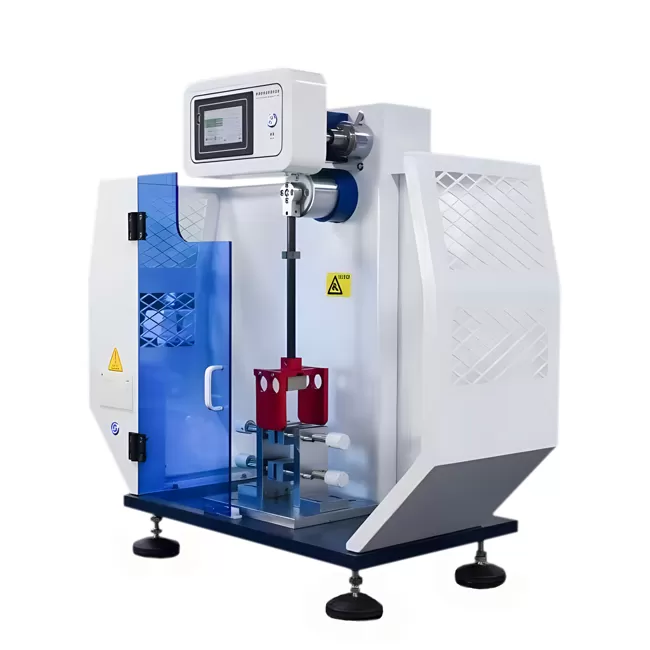
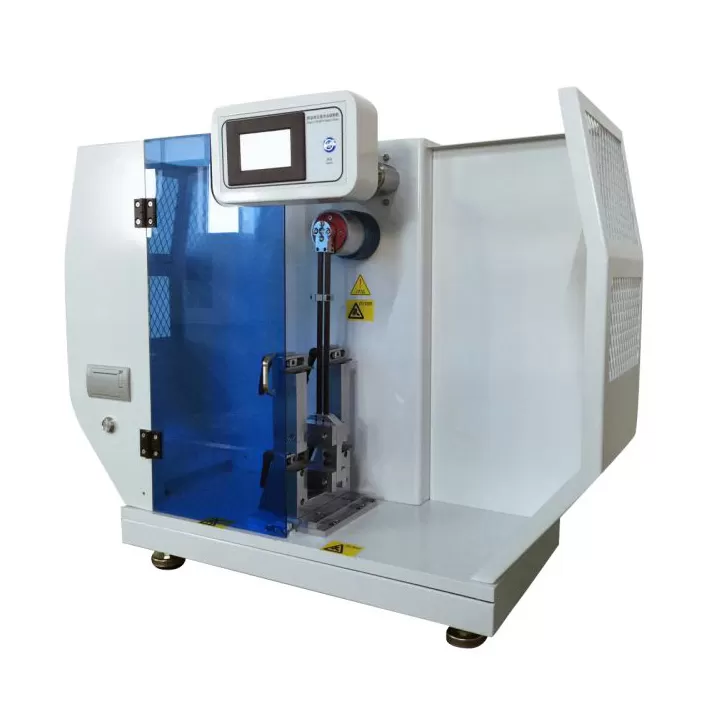
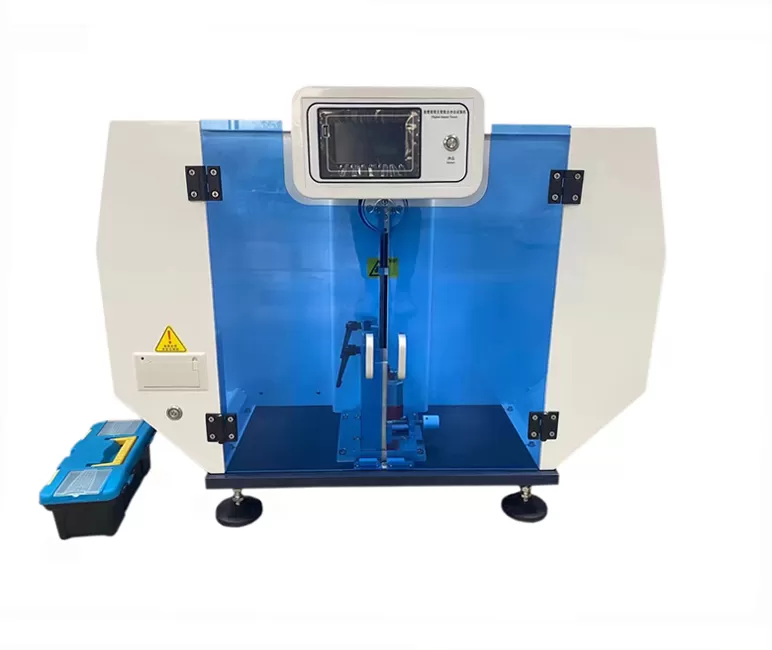
News Industry News Industry News Precision in Polymer Analysis: Rubber Testing Machine Essentials for Quality Control 2026-08-19 Industry News 1 views For manufacturers reliant on polymer processing, the rubber testing machine serves as the definitive arbiter of material quality. Product performance in automotive seals, industrial hoses, and consumer goods hinges on precise measurements of tensile strength, hardness, and compression set. Without rigorous verification, compound inconsistencies lead to field failures, warranty claims, and reputational damage. This analysis examines the technical parameters, application contexts, and operational practices surrounding rubber testing equipment, drawing on HAOEN 's long-standing involvement in the sector. HAOEN 's Rubber and Plastic Test Equipment portfolio covers a broad spectrum of physical property evaluations—from tensile and abrasion to flexibility, puncture resistance, melting point, and flow characteristics—ensuring that a single rubber testing machine can be configured for diverse material challenges.
Rubber compounds exhibit a complex viscoelastic response under load. A properly configured rubber testing machine isolates specific properties to predict service behavior. Four principal test categories form the foundation of material qualification.
The Role of Rubber Testing Machines in Process Control
Dumbbell-shaped specimens undergo uniaxial tension until rupture. The rubber testing machine records force and extension data, yielding tensile strength (MPa) and elongation percentage. These values indicate the compound's reinforcement level and cure state. For example, a carbon-black-filled NR grade typically delivers 25–30 MPa tensile with 500–600 % elongation, whereas an unfilled EPDM might produce only 8–12 MPa. Batch-to-batch variations exceeding ±5 % often signal mixing inconsistencies or scorch issues. Many production lines integrate an automated rubber testing machine to sample every batch, flagging deviations before they affect downstream molding. HAOEN's tensile testing configurations also accommodate plastics, allowing measurement of yield strength and break elongation across different polymer families.
Indentation resistance, measured by durometer, provides a quick quality check. A rubber testing machine equipped with a Shore A indenter applies a specified spring force to the specimen surface. Readings correlate with modulus at small strains, influencing sealing pressure and damping characteristics. For O-rings and gaskets, hardness tolerances are usually set at ±3 Shore A points. While a bench durometer suffices for spot checks, high-volume operations benefit from a motorized rubber testing machine that eliminates operator-dependent pressure variations. HAOEN has observed that many quality incidents trace back to improper durometer positioning rather than compound faults.
Technical Considerations for Equipment Selection
Under sustained compression, rubber relaxes and loses its sealing force. The compression set test involves compressing a button or ring specimen to a fixed deflection (typically 25 %), heating it at 70 °C or 100 °C for 22–70 hours, and measuring the permanent deformation after release. A low CS value (e.g., below 20 %) indicates excellent recovery. This parameter is non-negotiable for gaskets in flanged joints. Since the test spans days, a dedicated rubber testing machine with multiple stations and temperature control is standard in rubber testing laboratories. The fixture design must conform to ASTM D395 or ISO 815; misaligned plates produce erroneous results that mislead engineering decisions.
Maintenance and Calibration Practices
Testing after curing is reactive. A more proactive strategy employs the rubber testing machine to monitor the compound before molding. The moving die rheometer (MDR) measures cure kinetics—scorch time, cure rate, and torque maximum. This data enables the production team to adjust accelerator levels or mold temperature in real time. For instance, a sudden drop in torque maximum signals a lower crosslink density, which translates to reduced tensile strength. The MDR rubber testing machine thus bridges the gap between raw material acceptance and final product inspection. Many HAOEN clients implement a statistical process control (SPC) system around their MDR data, setting control limits for each parameter. When a batch exceeds the warning limits, the rubber testing machine triggers an alert, allowing the operator to rework the batch before it wastes molding cycle time. Additionally, HAOEN's rubber and plastic test equipment includes melt flow indexers to gauge polymer viscosity and processability—a critical complement to rheological data.
Frequently Asked Questions
Beyond rheology, hardness and tensile data feed into capability indices (Cpk). A manufacturing line with a Cpk above 1.33 for tensile strength demonstrates consistent performance. Regular use of a rubber testing machine provides the historical data to calculate these indices and identify deterioration trends—such as a gradual decrease in elongation over several shifts, which might indicate a change in the plasticizer source. This data-driven approach transforms quality control from a gatekeeping function to a process optimization tool.
Key considerations for laboratory teams
Selecting a rubber testing machine involves more than load capacity and accuracy. The decision should reflect the range of materials, test standards, and production volume. Key factors include:
Load cell accuracy and range: A machine with a 5 kN load cell suffices for most rubber tensile tests, but high-modulus compounds (e.g., polyurethane) may require 10 kN. The cell's class (0.5 or 1) determines measurement uncertainty.
Extensometer type: Contact extensometers with knife edges are reliable for elongation up to 1000 %, but non-contacting video extensometers offer better resolution for soft, easily marked specimens.
Temperature chamber capability: Testing at elevated temperatures (e.g., 100 °C for engine mounts) requires an environmental chamber . The rubber testing machine must accommodate the chamber without compromising crosshead stiffness.
How HAOEN builds this equipment
The chamber described above is designed and manufactured in HAOEN's own plants in Dongguan, rather than assembled from purchased sub-assemblies. That distinction matters when a lab needs repeatable performance across a fleet of machines.
- Chamber geometry, airflow and insulation are engineered in-house and issued as controlled drawings
- Steel is cut, bent and welded on our own line, with stress relief and surface treatment between stages
- Refrigeration, electrical cabinets and sensor harnesses are installed and wired by our own technicians
- Each unit runs a full commissioning cycle with logged test data before the QC file is signed
- Export crating, anti-rust treatment and the complete document set are prepared in-house
Because engineering, production and calibration sit under the same roof, specification changes during a project are absorbed by the factory rather than passed between suppliers. Standard units follow the same route, which is why a catalogue model and a custom-built chamber carry the same documentation discipline.